AssetOps Toronto 2026: Canadian Firms’ AI Ambitions and Operating Reality

.avif)
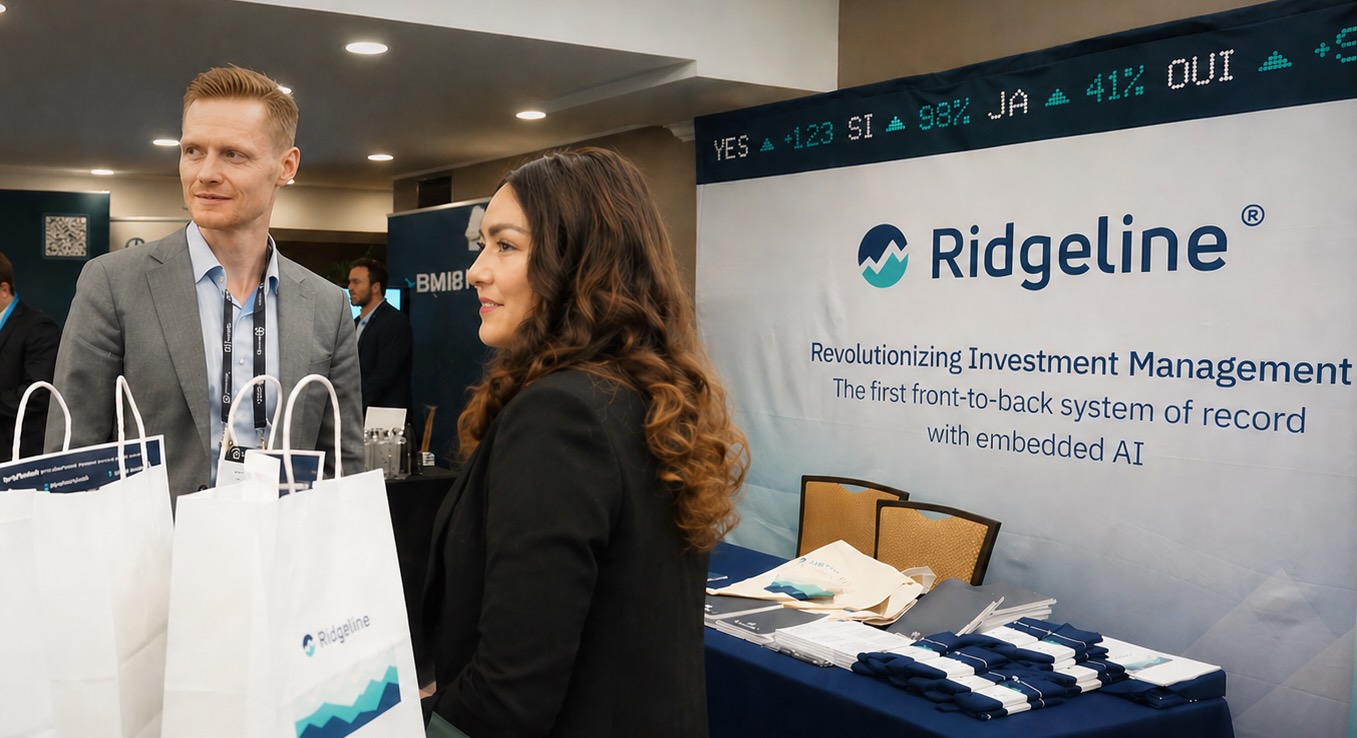
Last week, in anticipation of AssetOps Toronto, I was joined by a group of operations and technology leaders on the rooftop of The Chase. The conversations kept circling back to T+1 continuing to compress timelines, AI raising the bar for data readiness, and investors expecting more transparency and responsiveness from their managers.
AI is changing how businesses run, which means it will change how returns are generated for clients. Asset managers are now being asked to make judgments about that shift on behalf of their investors. It’s hard to do that with confidence if you don’t have hands-on experience with AI. You need to see, inside your own firm, how AI actually affects workflows, costs, decision speed, and risk before you can trust how you factor it into a portfolio. Very quickly, AI use has become a necessity in the eyes of boards, clients, and internal leaders.
Operations leaders are often the ones deciding where automation belongs, how data should move, and what “in control” looks like when more work is handled by systems instead of people. When they use AI to redesign how their own organization runs, they gain more than a reduction in manual work and operational risk. They also gain a more grounded sense of how AI might show up in the companies and assets they allocate client capital to.
But that is simpler said than done. While firms are eager to explore what is possible with AI, they are routinely frustrated to find that vendors cannot deliver to their expectations nor meet their trust requirements. That is causing a lot of anxiety as firms feel like they are standing still while the industry progresses.
Most firms will admit that their current operating models are under strain and they need to modernize. At the same time, they are cautious about introducing new risks as they undergo change. Across keynotes, panels, and side conversations the following day at AssetOps Toronto, these three topics kept surfacing: how to make AI real and safe inside your firm, how to prove you are in control to clients and regulators, and how to simplify the operating model enough to create room for growth.
Current Tools Aren’t Meeting Firms’ AI Appetite
Firms are hungry for AI that does more than summarize text or sit on top of existing workflows. They want tools that can see across portfolios, operations, and clients, and that help resolve breaks, anticipate risk, and speed up decisions. Speakers at the event advocated for firms to “give all your employees AI for their jobs” and “use AI internally so you know how to use it in investing.”
Leaders talked about hiring people who are naturally curious about AI and comfortable experimenting with new tools, but they were also clear that curiosity alone is not enough; without the right data foundation and workflow infrastructure, even the most AI-forward employees will be stuck.
Much of the AI available today lives inside single systems or narrow point solutions. Even when it's layered across the stack, it often is limited to surfacing information rather than coordinating action across systems.
The common constraint is the foundation. When data lives in multiple systems with different models, when critical steps still happen in spreadsheets and email, and when controls sit outside the tools people actually use, AI only ever sees part of the picture. There is no single place where workflows, data, and permissions are modeled clearly enough for AI to act inside them, so it stays off to the side.
That problem is especially sharp in Canada, where many firms run hybrid books that blend institutional and retail capital. Pension-adjacent strategies sit alongside mutual fund vehicles governed by National Instrument 81-102. In that setting, AI that cannot see the full book across mandate types, fee structures, and regulatory rules can create more risk than it resolves.
For value-oriented managers, if AI is going to change how companies generate cash flows, then understanding what it does to your own workflows, costs, and decision cycles becomes part of understanding value. Firms want a safe environment where analysts and portfolio teams can see how AI behaves in real processes, not just read about it in someone else’s research.
Firms only get there once they have unified their data and are operating from a single system of record. At Ridgeline, we have built a front-to-back platform with a unified data model that runs the investment book of record, workflows, and controls in one place. That gives embedded AI and automation access to real-time, well-governed data and clear workflows, so they sit inside the work rather than on the edges. Firms can test and scale AI in meaningful processes while still being able to explain how it works and why they trust the outcomes.
If you want to learn more about the innovative ways we have woven AI into the Ridgeline platform, this blog from Ridgeline VP of AI Alex Benke is a great start.
Firms Are Being Asked to Prove They’re in Control
The definition of a well-run investment firm is changing. It is no longer enough to point to policies, committees, and years of experience. Regulators and institutional allocators increasingly want to see how governance shows up in daily operations: how data flows, how decisions are recorded, and how quickly issues can be traced and resolved. As one speaker put it, “The absence of disaster is not the same as the absence of risk.”
That expectation is most visible in more complex strategies and private markets, where workflows have historically been manual and hard to see. As products evolve and clients ask for more transparency, firms are being pushed to show that their operating model can keep pace without introducing new fragility. Several leaders in Toronto described compliance and control not as a hurdle, but as a way to win and keep mandates.
The Ontario Securities Commission and other provincial regulators have made it clear that operational controls and data integrity are central to acting in the best interest of clients. For firms running pension-adjacent or institutional mandates alongside retail vehicles, the evidentiary bar is particularly high. Supervisors want to see the same quality of oversight across every book, not just the flagship funds. That led to questions in more than one session about how, and if, firms can adequately demonstrate consistent control when their operating models are spread across multiple systems.
If you can run trading, accounting, reporting, and client activity through one system of record, it becomes easier to see who did what, when, and based on which information. Oversight moves from reconstructing what happened after the fact to watching it in close to real time. Evidence of good governance is created as part of normal work rather than through one-off exercises.
Ridgeline’s platform is built around that premise. Because trading, accounting, reporting, and client activity all run on the same system, firms get a continuous record of who did what, when, and based on which data. That makes it easier to answer regulators’ questions, complete OSC and institutional DDQs, and run internal reviews with concrete evidence instead of manual reconstructions. Being able to explain how both humans and AI acted on the platform is becoming increasingly important.
Simplification Is Starting to Look Like a Growth Strategy
Modernization is still often described in terms of projects. Replace a system here. Upgrade a module there. Add a new vendor for one more need. But how much complexity can an operating model carry before it starts to drag on growth?
Tech stacks have grown as firms have tried to keep up with the times. As a result, data now lives in too many places. Basic concepts like cash are defined differently across systems. Accounting and operations teams have grown just to keep up with reconciliations and exceptions, even when markets are flat or fee pressure is high. Talented people are spending more of their time tying systems together and less of it focused on clients.
T+1 means firms cannot wait for end-of-day checks to discover a problem. Data needs to move closer to real time, and controls need to be part of the workflow instead of an after-the-fact review. Growth in private markets and cross-border business adds further strain, especially in Canada. Managers tied to the country’s pension ecosystem are layering private credit, infrastructure, and real assets on top of existing public strategies. Those who serve both Canadian and non-Canadian institutions have to meet different reporting standards, currencies, and regulatory frameworks, often on systems that were never meant to work together.
Simplification has become less of a clean-up exercise and more of a growth strategy. Reducing vendors, consolidating data, and moving more work onto a shared platform does more than trim cost. It creates the capacity to launch new products, to support more complex mandates without multiplying spreadsheets, and to respond more quickly when clients or regulators ask for something new.
Ridgeline is built with this kind of simplification in mind. When front-, middle-, and back-office teams work on a single cloud-native platform, firms can retire overlapping tools, cut reconciliation work, and roll out new products or reporting without adding more complexity. That frees up scarce time and budget so teams can focus on clients, new strategies, and the investment work that actually drives growth.
Where This Leaves Canadian Firms
If the conversations at AssetOps Toronto are any indication, Canadian firms are ready to move from talking about modernization to doing the hard work. AI is a huge part of that, but so is governance, regulation, and the realities of running complex books in a T+1 world.
For value managers in particular, there is an opportunity inside that shift. If AI is going to change how businesses generate returns, then understanding its real impact on workflows, costs, and decisions inside their own firms becomes part of understanding value. The firms that modernize their foundations enough to use AI deeply and safely will have a clearer lens on what is happening in the organizations they allocate client capital to.
Ridgeline was built for that kind of operating model. If these themes resonate with you, I would welcome the chance to keep the conversation going and show how Canadian firms can use Ridgeline to drive sustainable growth.
You can also join me on Thursday, May 14, for a 30-minute overview about Ridgeline and a demo focused on the value Ridgeline’s AI-powered platform delivers to equity and fixed income investment managers. Register now.

.svg)
Read Next

Meet Your New Digital Co-Worker: How AI Agents Are Changing Asset Management
Ridgeline's VP of AI breaks down what AI agents or "digital co-workers" can offer your firm
We Built a Platform Your Firm Never Needs to Upgrade
Learn how Ridgeline frees firms from costly, disruptive upgrade cycles by delivering continuous improvements that accelerate innovation.
How Can Firms Innovate with AI While Staying Compliant?
Ridgeline Chief Security Officer Jeremy Hittle shares how firms can innovate with AI while staying compliant and building trust.
.svg)
.svg)


