Customer Q&A: How Wasatch Is Rethinking How Work Gets Done With Ridgeline

.avif)
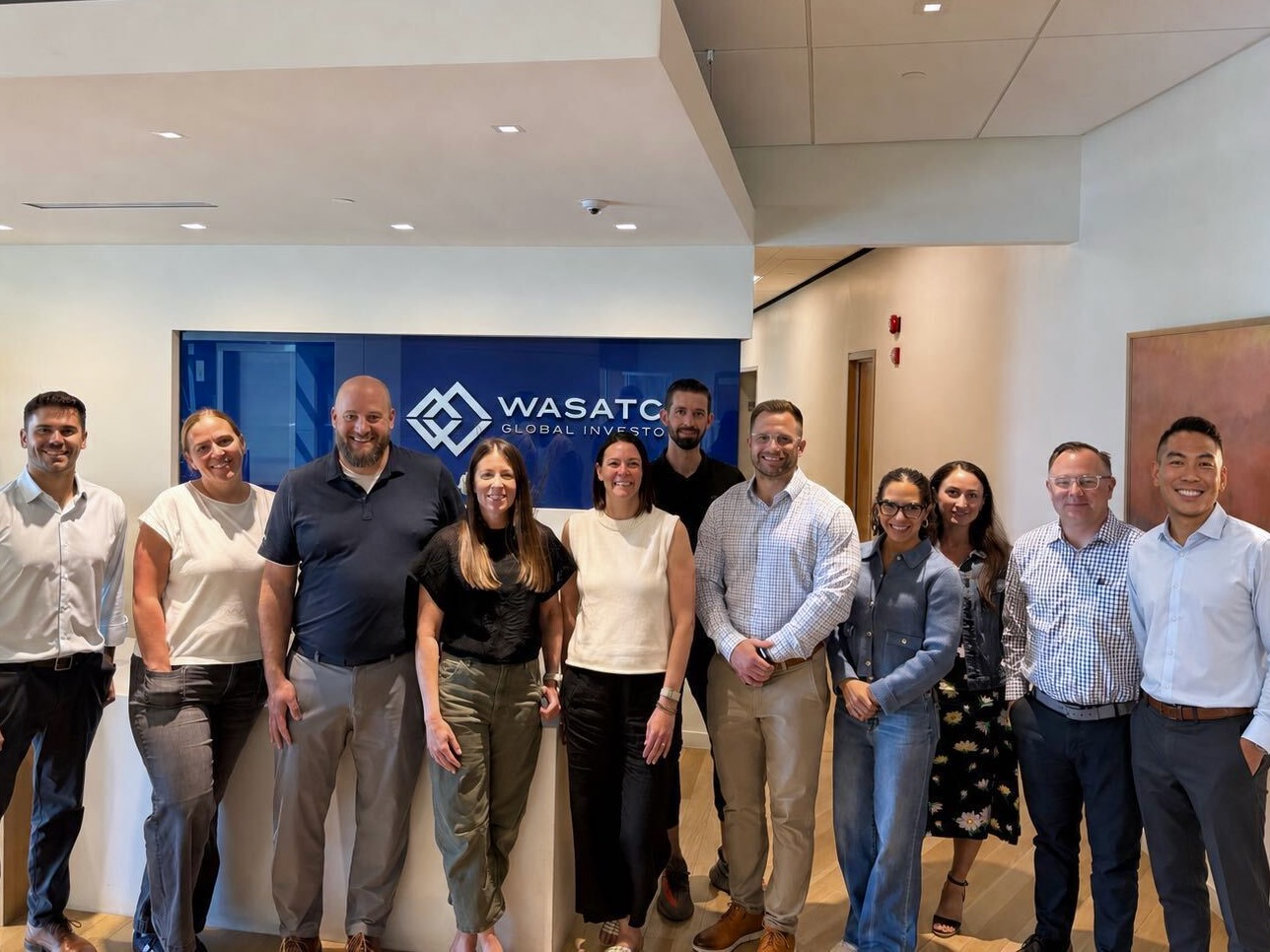
Following their go-live, Hollie Strasburg and Jed Williams of Wasatch Global Investors sat down with Ridgeline to share why they made the change and how they’re reimagining how work gets done. Read the press release.
Q. What is your role at Wasatch Global Investors?
Hollie: I serve as Chief Operating Officer at Wasatch Global Investors. I've been with the firm for over 20 years and oversee the firm's core operating functions, with a focus on technology, data, and infrastructure, to enable scalable growth, effective decision-making, and firmwide alignment across initiatives. My role is to ensure our people, processes, and technology work together to support our business today while positioning the firm for long-term growth and scalability.
Jed: I'm Director of Technology at Wasatch Global Investors. The Technology team is responsible for the firm's enterprise infrastructure, information systems, cybersecurity, and AI governance — everything from our cloud environment to the platforms our investment, trading, and operations teams rely on every day. A big part of my role is making sure our technology strategy isn't just supporting the business as it exists today, but positioning us for where the industry and the tools available to us are headed.
Q. How long was Wasatch on its previous technology?
Hollie: Our core investment operations platform had served the firm well for over three decades. Like many asset managers, we had enhanced it over time, but it had reached the point where modernization would create significantly more value than continuing to build around legacy architecture.
Q. Were you actively looking for new technology when you learned about Ridgeline?
Hollie: Yes. Our biggest challenge wasn't any one application, it was the overall experience of operating across multiple disconnected systems. As information moved through the investment lifecycle, it often required manual handoffs, duplicate data entry, and different user experiences depending on where you were in the process. We were looking for a platform that could unify those workflows, reduce operational complexity, and provide a stronger foundation for the future.
Jed: Yes. As part of a broader technology modernization strategy, we were evaluating how much of our infrastructure footprint we could shift away from on-premises, self-managed systems. This initiative reached beyond just the core investment systems. Supporting multiple legacy platforms meant our team was carrying operational and security overhead. System integrations had expanded over the years, were heavily customized, and had a growing built-in maintenance component. Upgrades, integrations, and infrastructure refresh added complexity. From a technology standpoint, we'd reached a point where a large portion of work hours were spent on keeping the lights on rather than modernizing. We wanted to move toward a model in which we could offload the infrastructure burden to a trusted partner and redirect our team's time toward higher-value work.
Q. What was your first impression of Ridgeline?
Hollie: Ridgeline's vision. They weren't simply rebuilding legacy software. They were rethinking how an investment management platform should operate. Just as importantly, we saw an opportunity to partner with a team that genuinely wanted client input. We were excited by the opportunity to help shape the platform by bringing the perspective of a long-established asset manager with complex operational needs. That collaborative approach made Ridgeline feel more like a strategic partner than a software vendor.
Jed: What stood out to me first was the architecture. Ridgeline was built as a true SaaS platform from the ground up, not a legacy system retrofitted for the cloud. That meant we could hand off the infrastructure management — servers, patching, uptime, scaling — to Ridgeline and let our team focus on higher-value initiatives. Just as compelling was that the platform was clearly designed with AI in mind from day one, rather than AI being bolted on after the fact.
Q. What about Ridgeline was most compelling to Wasatch and justified making a significant technology switch?
Hollie: First was the opportunity to consolidate multiple critical functions onto a single platform, improving transparency and reducing operational complexity. Second was the confidence that Ridgeline's modern architecture positions both firms well for the future. Implementing a platform like this is a decision that extends well beyond today's requirements, so we wanted a partner with a clear vision for where investment operations are headed.
Jed: For me, it came down to two things. First, the SaaS delivery model — it removed a substantial amount of infrastructure management responsibility from our team and let us reallocate that capacity toward strategic initiatives rather than maintenance. Second, Ridgeline's architecture was designed with current technologies in mind, built to take advantage of AI now and as the technology continues to evolve. That mattered because our broader technology strategy is centered on making sure the platforms we invest in today can grow with us into an AI-enabled future, rather than needing to be replaced again in a few years.
Q. Was the implementation experience what you thought it would be?
Hollie: Implementing a platform that touches nearly every part of the investment lifecycle is never a simple undertaking. We intentionally approached the project over an extended timeline to allow for configuration, testing, parallel validation, and user adoption. The implementation required a significant commitment from both teams, but that level of collaboration contributed to a successful outcome.
Q. What has it been like working with your Ridgeline partners throughout implementation?
Hollie: Our implementation team truly became an extension of our own. They invested the time to understand how Wasatch operates, and when we encountered complex challenges — as every implementation does — they responded quickly, brought the right people to the table, and worked collaboratively with us to develop practical solutions. It felt like a true partnership, with both teams committed to delivering a solution that will benefit Wasatch and continue to strengthen the platform for firms with similar operational complexity.
Q. What processes will be most improved for you by having all your data flowing through Ridgeline?
Hollie: One of the biggest wins is that we're no longer asking our investment teams to operate across disconnected systems. Ridgeline enables us to retire legacy proprietary software and bring our portfolio managers directly into the investment platform alongside traders, compliance, and operations. That shared operating environment improves transparency, reduces manual processes, and gives everyone a common view of the investment lifecycle.
Jed: Consolidating onto a single, cloud-native platform meaningfully reduces our infrastructure footprint and the number of systems our team has to secure, patch, integrate, and maintain. Fewer platforms mean a smaller attack surface, simpler architecture, and less operational overhead overall.
Q. What can you tell us about your use of Ridgeline's AI capabilities?
Jed: AI is a major focus of our technology strategy right now, and one of the things that drew us to Ridgeline was knowing the platform was designed with AI as a core capability rather than an afterthought. We're still early in exploring what that looks like in practice, but having a platform that's architected to take advantage of AI gives us confidence that our investment in Ridgeline will continue to pay off as the technology evolves.
Q. What's one thing you would tell another firm who is curious about Ridgeline?
Hollie: I'd encourage firms to think beyond the software itself. The implementation is an opportunity to simplify workflows, challenge long-standing processes, and create a more connected operating environment. We found that some of the greatest value came from rethinking our processes, not simply replacing our technology. Having a partner that's willing to engage in those conversations and evolve alongside you makes a meaningful difference.
Jed: Look at Ridgeline as part of your broader technology strategy, not just a system replacement. Moving to a true SaaS model changes the equation for your internal technology teams and forces you to look at legacy technologies. Partnering with colleagues in other departments, such as operations, trading, and compliance, is key to making good technology decisions.
Want to learn how an AI-native platform for investment management can help your firm reimagine how work gets done? Request a demo or reach out to us at hello@ridgeline.ai.

.svg)
Read Next

From “Curious” to “Customer” in 6 Months with Geneva Capital Management
Geneva Principal Katie Ellenberg shares her firm's record-setting 180-day Ridgeline go-live journey.

Customer Q&A: How Saratoga RIM is Clearing the Path to Growth with Ridgeline
Hear from customers about how Ridgeline is removing barriers and accelerating growth.
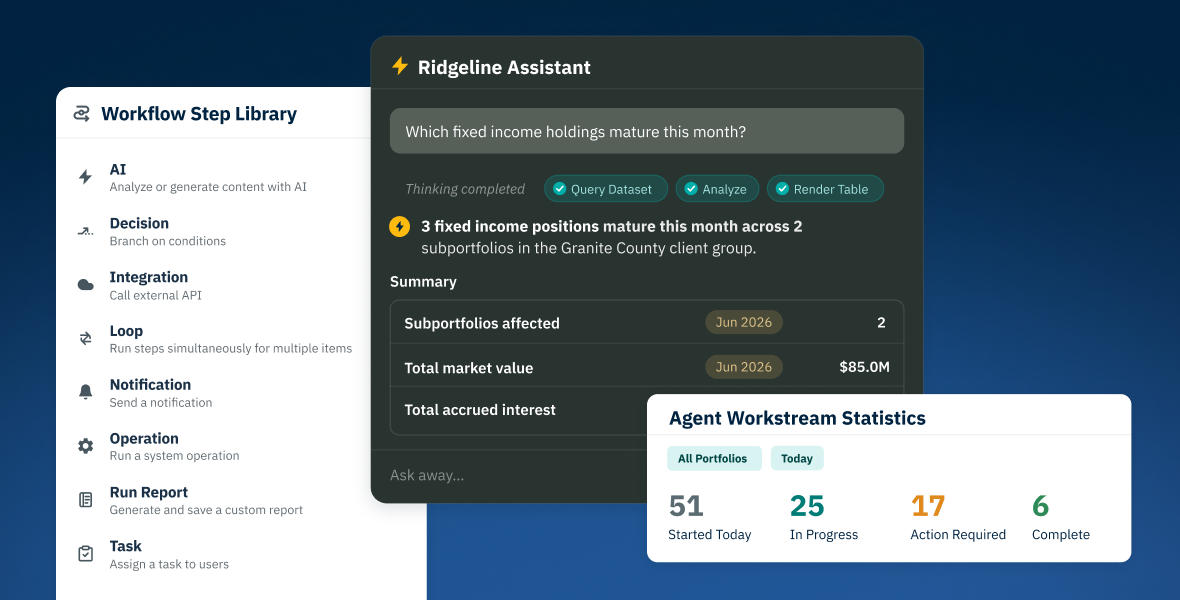
Ridgeline Intelligence Puts Your Firm’s Data to Work With AI
Responsibly bring AI directly into the decisions and processes investment managers rely on every day.
.svg)
.svg)


